Showing posts with label politics. Show all posts

Monday, March 8, 2010

International Women's Day

is today, how about that.

I think I'd like to say something about it, but I'm not sure what. Feminism can be difficult to talk about (Gosh, really?). If you agree with me, then I'm (uselessly) preaching to the converted; but if you disagree, then our disagreements are probably fundamental and/or quite subtle (& so, either way, probably v difficult to discuss intelligently via interweb). And anyhow, why should you care what I think about it?

But this is my blog, so I'm going to do it anyway.

What I think "about women" – uh, politically speaking – has spiralled around in different directions as I've grown up, I think. As a kid of leftish-lowermiddleclassy parents, I internalised the status quo of 1980s-90s political correctness: there is sexism in the world, women are treated badly and unfairly, this is bad and unfair. But as a teenager it dawned on me that being male wasn't all steak and glory, either; there were unexpectedly bad aspects to being a man in the modern world, too. For example: pop culture seemed to be telling me that boys were foolish and troublesome and evil, most of the time. And I felt like I was being told that girls could do anything, but simultaneously that boys could not. When you're adolescent, any potential unfairness (towards yourself) is a red rag, so this apparent "stupid boys will be stupid boys" meme bugged me a lot. Were girls now getting the best of everything, and always the benefit of the doubt? Had feminism "gone too far in the other direction"?

No. No, it hadn't, and I feel kind of stupid now for even considering sentiments like that. But it took me a few more years to see the world clearly from a few more sides, other than my own. And I had been privileged to grow up in an environment where sexism against women was sometimes less than obvious, I think; maybe that was why it took me a while to see and understand all the things that other people were thinking, the ways that they were acting, the ways in which they were being affected. Actions and consequences, assumptions and beliefs – these aren't always obvious. (Obviously.)

This is what I assume and believe, now: that the similarities across gender are nowhere near as significant as the differences between individuals. I've never known a woman who was more of a woman than a person. But I know most people don't agree with me, they don't believe this; instead, most people think that there are a bunch of crucial, essential commonalities to men and to women, and that these gender-commonalities are more significant than anything else. And to me that's the essential problem of sexism, because I believe that gender is not actually as significant as we make it – or at least, it doesn't have to be. Sexism, like racism, is bad because it's essentially untrue.

So our status quo is messed up, I think. And everyone in our society is disadvantaged by the false assumptions of sexism – that's what I was confused to learn as a young teen, that men (i.e. me) were sometimes being disadvantaged too. But that's not to say that men have it worse overall, because they don't. You can't see the world honestly without seeing that it still disadvantages women far worse than men, I think. (There are so many examples, I'm not even going to get into them; not today, anyhow.)

So. To me, this is International Women's Day: it's a reminder that things are still bad. (Though thankfully much, much better now than they ever used to be; & people sometimes underestimate just how much better, I think.) There are still a whole bunch of big fat sexist problems, all over the place. It makes me feel like I'm always needing to think hard and pay attention and act bravely and behave well, to do my part to make things better. Be fair. Don't be a dick.

International Women's Day: Don't Forget.

So that's what it means to me and what I think about it, I guess.

But, ah, what a serious and humourless post! (Not to mention, possibly patronising, stupid, facile, self-indulgent, myopic, wrong? I don't even know . . . but please tell me in the comments.)

Sorry, folks. To cheer us up, here's a picture of a pony:
Right on.

Monday, December 14, 2009

Mondays Can Be Disturbing

Cheap of me to do two linkblogs in a row, rather than blogging something that I've actually created myself, but this tickled me too much to resist.

CONTEXT:
See, lately I've been looking for someone* to fill a vacant room in my house, and the process of interviewing prospective housemates has reminded me just how difficult it is to get to know people from only brief conversations. You can absorb a lot of intuitive impressions, but it seems impossible to really find out what they'll be like; I think people usually don't relax enough to show their "true" colours until you've been living with them for weeks, at least.

Thus, there's been a running joke between me & my other (non-new) housemate about the absolute best way to interview a stranger: the Voight-Kampff test.

The Voight-Kampff test is the interview from Blade Runner (via Do Androids Dream Of Electric Sheep?) that's supposed to test your empathy – empathy, of course, being the unique quality that sets humans apart from "non-humans" (e.g. animals, psychopaths, killer robots). I've always thought it would be great fun to spring the Voight-Kampff interview questions on somebody when they're not expecting it, but I've never had the guts to do it "for real" . . .

. . . unlike the journalists at San Francisco's The Wave magazine, who decided to give the Voight-Kampff test to all the upcoming SF mayoral candidates. If you don't know Blade Runner, you probably won't get it, but I thought it was freaking hilarious.

As one would expect, at least half the mayoral candidates are definitely not human.


*Subsequently found: hello, Sarah D—! She's moving in tomorrow, good luck to all involved . . .

Saturday, December 5, 2009

Like A Tiger

I do not care about this recent Tiger Woods affair car-crash whatever thing. I also did not care about the Premier of South Australia having an affair last week, or whatever that was. I mean, I don't think I ever used to care about "celeb adultery shock!" stories, much – but lately I've been more than uninterested, I've been damn well anti-interested, to the point that celebrity sex scandals are actually repelling my interest.

Is it just me? I know that famous people's extramarital affairs used to be much more of a big deal, years ago, because extramarital affairs used to be much more of a big deal in general, years ago . . . Until the 1970s, divorce was always scandalous and/or nigh-impossible; sex scandals could literally bring down a government. Fair enough these stories were well newsworthy, then.

Today, though . . . how is adultery still worth a broadsheet's front page? Is it really news? I mean – what's the divorce rate, these days? I'm 28 now, and I'm almost the only person I know whose parents aren't divorced. Only a minuscule fraction of marriages last from the vows 'til death without being interrupted by adultery and/or divorce. Shouldn't it be a hell of a lot more newsworthy when famous people don't have an affair and/or break up?

This is the gist of my rant: adultery is BORING. Adultery is ROUTINE. Adultery is EVERYWHERE, even if some people still refuse to admit it. So can't we just assume that most famous married people are having affairs, and then forget about it? With rare exceptions, adultery has no bearing on anything that the famous person is actually doing in the public sphere. And it's none of our business, right? Look, I enjoy reading about (some) famous people, I totally understand the impulse to learn the "private" details of their lives; it's a neat thrill, sometimes. But adultery just isn't doing it for me, anymore. Adultery is dull, predictable and petty; it's not exciting, it's not even sexy. It leaves me feeling vaguely glum. I'd rather know what Tiger Woods eats for breakfast than know the state of his marriage, and I don't really care what he eats for breakfast. I don't even play golf.

I DO NOT CARE about Tiger Woods's marriage.

However. I did find this Chinese news report rather intriguing:

(via Pajiba)

The Onion's version of events is compelling, too.

Am I in a minority of one, in not caring about celebrity adultery? Am I being too old-fashioned, or too new-fashioned, or just daft?

/end rant

Wednesday, March 11, 2009

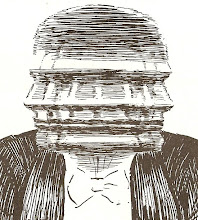
Headmaster, Targetmaster

There's a whole bunch of these Obamastyle riffs out there, but I swear – there's something really sublime about this one.
"Change into a truck." Think about it.


(Also: if you get the joke in the title of this post, then I can't wait to show you my next Friday out-of-context post. *whistle*;)

Wednesday, December 3, 2008

Sometimes you don't notice something for six months

and then you see it on a wall somewhere


and it makes you grin.

On a mostly unrelated note: here's something I read today. It's either irrelevant or in bad taste to mention it in the same post as the pic above, but who cares?
(Non sequiturs are still awesome, right?)

--"Topical Is Not Under Your Skin" Thoapsl

Wednesday, February 13, 2008

You Are Wrong

So, I'm all for disagreement and protest and whatnot. And if someone is making a speech (or whatever) that you vehemently disagree with, it's good to be able to express that somehow. Case in point: Brendan Nelson's speech today (following Kevin Rudd's historic "Sorry" proclamation), which a ton of people apparently booed, turned their backs on, disconnected the broadcast of, etc etc. Now I'm not a fan of Nelson's speech myself, so I find it hard to be against what people did here. But there's something about that method of protest in general that irks me.

Isn't refusing to listen to the people you disagree with the absolute worst thing that you can do, in an argument? For one thing, how can you expect the other people to listen to you in return? For another: if you want your own stance to be the best one, shouldn't you listen to as many opposing views as possible, in order to refine your own arguments against them? Shouting over someone rather than listening to them turns a discussion into not-a-discussion, into something else. It just becomes a kind of performance, a visceral sort of declaration of us-vs-them.

(It also reminds me too much of the far-left groups I knew at university, and why they tended to annoy and upset me: because, fundamentally, I agree with them. I share most of their dislikes and their aims, I just hated the ham-fisted, dogmatic & overly-aggressive way they usually went about them).

If I said that "arguments are not fights", then it would sound like a truism. But what about "arguments are not wars", or "arguments are not battles"? Doesn't sound quite right, does it? People are used to treating arguments and disagreements as if they really are wars. It's way too easy to slip into the rhetoric of attack, into that same sort of aggressive, confrontational behaviour. But while that's a lot of fun and often cathartic (especially if it seems like you 'win' at the end), I've come to think that it just doesn't work. Nobody is convinced that they are wrong because they were yelled at and not listened to. As a protestor, what do you really want do – make a righteous symbolic action against your enemy, or turn your enemy into your friend?

(on the other hand... is it ironic that I'm arguing against an example of people who were making a symbolic protest against an aspect of an event – the "Sorry" speech – that was, in itself, important for its symbolism more than anything else?)

I know, I know, this is all naive bullshit; some people can't be reasoned with, can't be argued with, you have to be tough and uncompromising to get results blah blah etc. But I don't think that's entirely so, to be honest. And I'd say that the fact that so many people appear to be immune to changing their minds or allegiances (eg, the seemingly intractable red/blue social divide in the US) must be related to the modes of discourse that they are living in (& ps: even if so inclined, please don't stop reading just because I used the word 'discourse'). People's minds can be changed, but sometimes – most of the time – it has to happen slowly and with care. Right?

Early on in Dead Poet's Society, Robin Williams' character tells his students to rip out the introduction to their poetry textbook, because it's spouting a whole bunch of crap about what supposedly makes a good poem. But if it's wrong, why not just ignore it? Why not keep it there, as a reminder of how easy it is to be authoritative and wrong? Why bother to damage the binding of your book? (Because it's otherwise not an effective spectacle, it doesn't catch your attention and it's much less dramatic). If arguments are bad, let them stand up for their minute so that you can remember how to knock them down next time.

Ah, if you're not convinced of what I'm saying by now you never will be. Go read something else, you stupid loser.